Posts

Showing posts with the label Teaching and Learning

Crafting Communications with Care: Because life is too short for ugly presentations

Image
  Crafting Communications with Care: Because life's too short for ugly presentations The Idea: It is valuable to invest time and care in creating visually appealing presentations. Well-designed presentations enhance communication, engage the audience both intellectually and emotionally, and have a lasting impact. To help here are five simple recommendations for creating appealing presentations: (1) Draw out the message clearly before designing (2) Reduce visual clutter (3) Organize information to promote processing (4) Invest in learning to use design & presentation tools available to us (5) Leverage templates provided by professional designers. Educators and communicators will benefit from recognising the value of design skills in conveying ideas powerfully and fostering engagement. “Life is too short for ugly presentations” - Seth Godin  Today, Seth Godin ended his blog post with LIFE IS TOO SHORT FOR UGLY PRESENTATIONS. Immediately I highlighted the statement and...
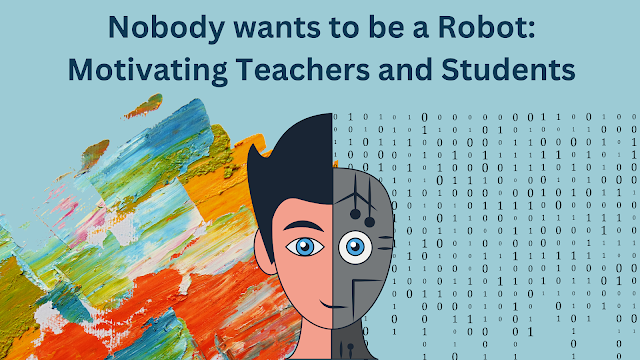
Nobody wants to be a robot: Motivating Teachers and Students

Image
The Idea: Both teachers and students are motivated by the same fundamental attributes: Competence, Relatedness, Purpose, and Autonomy. By establishing professional and learning environments that facilitate the growth of these core attributes, we can cultivate communities of motivated educators and students.

25 Books that offered me wonderful guidance as a School Leader

Image
Here is a list of books that have influenced my thinking in different areas. They have been a very important source of guidance in my journey as a school leader. So I thought it would be a good idea to compile and share some of them for anyone who might benefit!

6 principles that made me a purposeful, enthusiastic, engaged reader at age 31

Image
The idea: Explore to discover the right content (what you want to read), purpose (why you want to read) and mode (how you want to read). Find a combination that is works for you. This can lead to sustained, enjoyable and impactful reading habits.

Screen Time: An important perspective for educators & parents from screen time research

Image
The idea: This quote from the paper summarizes the message: 'For parents and educators, we suggest that, “it is time to move beyond a heavy focus on risk with little exploration or recognition of opportunities ”, and instead leverage the strengths and benefits of ST in a purposeful way while mitigating any associated risks during these exceptional times'

5 Questions to help you choose math strategies more purposefully

Image
The Idea: Be thoughtful about which math strategies you use or choose to equip students with. Use these 5 important questions (adapted from Adding it up ) to understand what each math purpose each math strategy serves: Transparency: Does the strategy help me understand the concept better?  Efficiency: How productive is the strategy? Does it reduce the time/effort?  Precision: Does the strategy give you a precise answer or an estimate? Clarity: How easy is the strategy to use? Is it easy enough to implement on my own? Generality: How transferable is the strategy? Can I apply it to many other situations or will it work just in this one context? You can use these key questions to help your students choose the most appropriate strategy based on the needs of their problem (for example, does our problem require a precise answer or an estimate? Do we need to break down the problem to understand it better? Do we just need to compute something quickly?) 

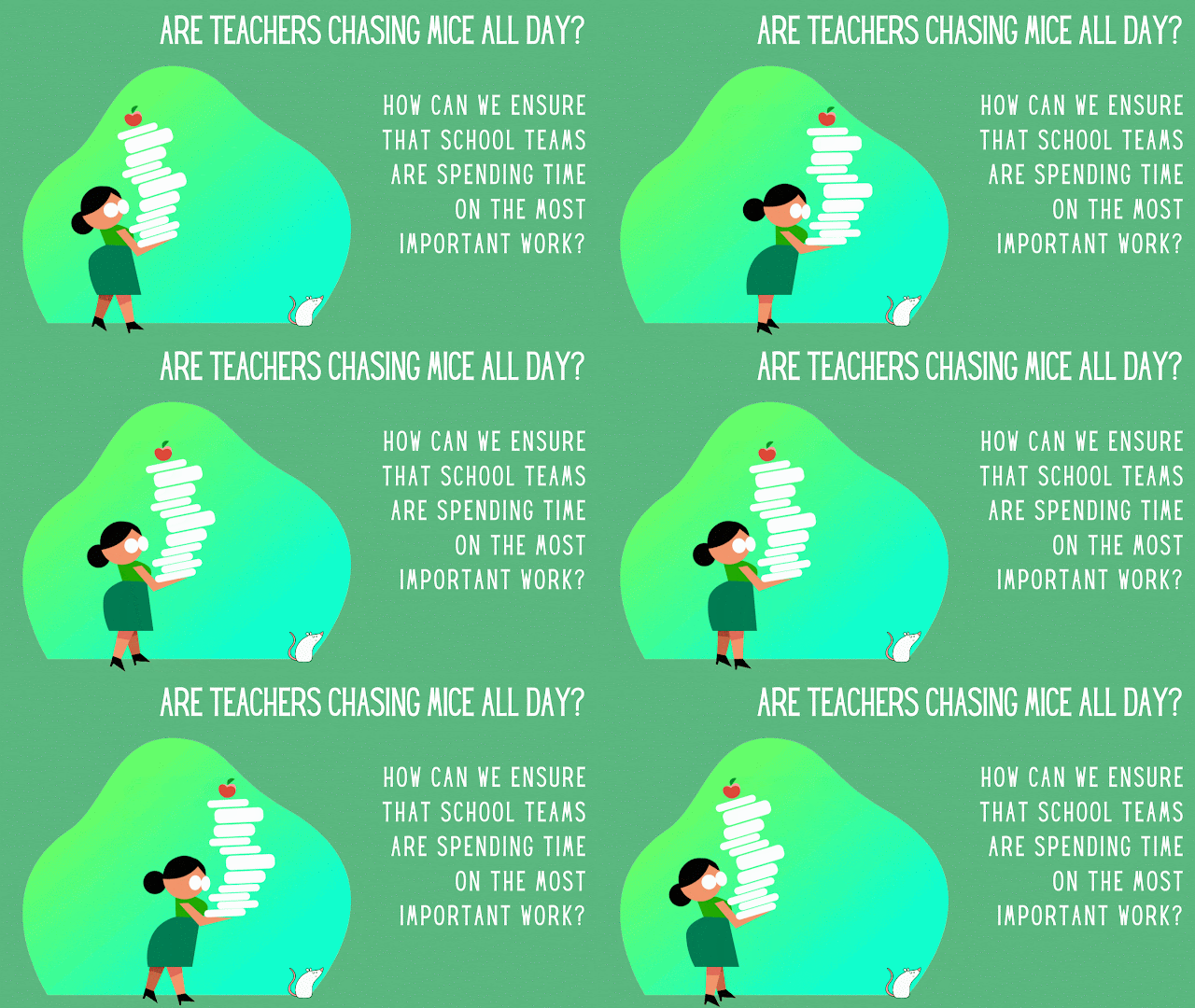
Are Teachers chasing mice all day? How can school teams spend their time on the most important work?

Image
  The idea: Work that impacts student learning is the most important work. We need to to prioritize this work over less important tasks that fall on a teachers' plate. This can be done by (1) Prioritizing - knowing which tasks are most important and making time to do them first; (2) Optimizing - ensuring that productivity and collaboration are happening in the most optimal way possible; (3) Empowering the team to prioritize their work and optimize their time effectively.

Why School Leaders should pay attention to 'Positive Outliers' in their organizations

Image
The Idea: School Leaders need to look out for ‘Positive Outliers’ - the few team members that tend to be unconventional problem solvers in their workplaces, even with the same challenges and resources as their peers. Leaders must recognize the potential of their ideas and knowledge and leverage them for solving the many complex challenges that schools encounter.

What-Why-How: The structure you need to communicate any idea powerfully

Image
The idea: ‘What-Why-How’ - a structure to communicate any idea powerfully. This works well for Teacher Professional development, Classroom Lessons, Team communication on new initiatives or programs.  The What-Why-How structure has been my go-to structure for communicating important ideas to anyone. I have been using it for 5 years now and it has improved the quality of my communication tremendously.  Let me use the What-Why-How structure to describe the What-Why-How structure!

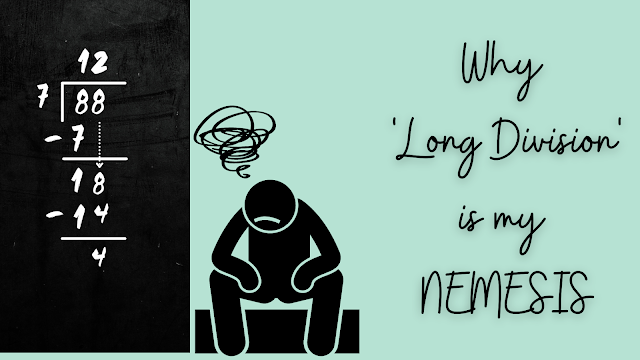
Why 'long division' is my nemesis and why teachers should ditch it too!

Image

Every teacher striving for inclusive classrooms must know these 6 fundamental ideas about learning

Image
The idea: An individual's learning experience is impacted by several environmental, physiological and socio-emotional factors. As educators, we must be aware of the impact that they can have on learning if we are to achieve 'Neurodiversity as the norm'.  I spent 5 years working at a special education school. That wonderful experience and community has dramatically impacted my outlook on learning and life. This 3 Part blog is me taking stock of the important principles I have learned (1) About Beliefs (2) About Learning (3) About Teaching. Maybe some of them will be useful to others too!  This is Part 2 - On Learning Here is the link to Part 1 - On Beliefs  Here is the link to Part 3 - On Teaching (coming soon) My experiences in Special Education brought to light some very important fundamentals about learning. We had few students but with very diverse learning profiles. I learned so much about things in the environment or brain that can impact learning. It is important fo...

Beliefs about Inclusion and Equity that you should be adopting

Image
  The idea: The massive progress we have made as a society in the 21st century encourages us to re-evaluate our existing paradigms and redefine what we believe is possible. I believe social and technological advances today have readied us to embrace ‘Neurodiversity as the norm’ and thereafter ‘Universal Design’ Approaches. I spent 5 years working at a special education school. That wonderful experience and community has dramatically impacted my outlook on learning and life. This 3 Part blog is me taking stock of the important principles I have learned (1) About Beliefs (2) About Learning (3) About Teaching. Maybe some of them will be useful to others too!  This is Part 1 - On Beliefs Here is the link to Part 2 - On Learning   Here is the link to Part 3 - On Teaching (coming soon)

Assessment for Learning: The Uber Analogy

Image
The Idea: An Uber trip serves as a great analogy to understand Assessing for learning or Formative Assessment: Set Destination (Goals), Track movement (Student progress), Alter path (Teaching approach) if you are not moving towards your destination as planned. Central to learning and improvement is a system for tracking progress and feedback. This Uber Analogy is one of my favourite analogies to use while doing workshops on Assessment and its key role in improving practice. But first, let me clarify what kind of Assessment I am talking about. In Education we talk about two types of Assessment - Summative (of Learning) and Formative (for Learning). As the names suggest - Summative Assessment is typically evaluative, after the learning process and Formative assessments are typically during the learning process, to support learning and improve the process.  Here we are talking about Formative Assessments i.e. Assessment FOR learning. Traditionally Schools have focused mainly on evalua...

Great Teachers: What do they know and do?

Image
  The idea: A simple model that captures the essential capacities that make 'Great Teachers' - knowledge of & care for their STUDENTS; knowledge of and passion for the SUBJECTS they teach; knowledge of TEACHING practices and a desire to learn for life through inquiry, sharing and learning with their communities. I have always loved a good mental model. For 'What makes great teachers' I found it in the National Board for Professional Teaching Standards (NBPTS) Five Propositions  a couple of years ago. This model is so good that it almost feels like common sense, but it is also profound and serves as a fantastic vision for teachers to aspire to. A quick note on how we arrived here. Until we discovered this, the Danielson Framework for Teaching  helped anchor our vision for teachers. The Danielson Framework is one of the most well-established teaching frameworks and provides educators with a fantastic tool for evaluating good teaching. We still use this tool today to u...

Coaching teachers: When is feedback most powerful?

Image
  Coaching Teachers: When is feedback most powerful? The idea : When is systematic feedback most useful for learners in their journey from Novice to Mastery? Feedback on practice is most useful for learners who are building mastery, not as much for novices and for learners who have achieved mastery. This thinking frame can help you plan a structured coaching/ feedback system more effectively. Let me start by acknowledging the powerful role of feedback in learning ANYTHING. Education literature tells us how good feedback can positively impact learning and I have seen first hand the immense impact of feedback on learning over the last decade - for myself, my students and my colleagues. Yet, I often found myself in situations where well intended, relevant feedback did not feel useful. When I reacted like this, I attributed my feelings to not being open-minded enough. Until I read Deep Learning by Stellan Ohlsson . In the book, I discovered one of the most useful thinking frames for so...